Modern Style in Your Forties: Chic, Never Frumpy
Quick Answer: Modern style in your forties comes down to one distinction: aim for current, not young. Update your silhouettes to contemporary proportions, invest in quality tailoring and fabric over quantity, and skip trends designed for a twenty-two-year-old’s body and life. Frumpy isn’t an age — it’s an outfit that stopped being updated around 2014.
Somewhere around forty, a specific worry shows up in fitting rooms. Is this too young for me? Is this too old for me? Is there a narrow correct band and am I currently outside it?
There isn’t. But the worry is real, and it makes people freeze — and a frozen wardrobe is the actual mechanism by which anyone ends up looking dated.
Here’s the useful reframe: the problem was never age. It’s that most people stop updating around the decade they felt most confident, and then the world keeps moving.

Are There Real Rules for Dressing in Your Forties?
No. There are inherited assumptions, and they’re mostly leftovers from an era when forty meant something different than it does now.
No hemline rule. No “can’t wear long hair after forty.” No ban on sneakers, or bright color, or a leather jacket. Every one of those started as a magazine sidebar and calcified into folklore.
Frumpy is a choice, not an inevitability — and it’s usually an unconscious one. It happens when a wardrobe stops getting revised: the same silhouettes, the same lengths, the same proportions, worn faithfully for a decade while everything around them shifts.
The one thing that genuinely changes in your forties is that your life gets more specific. You know what you do on a Tuesday. You know which shoes you’ll actually walk in. That specificity is an advantage — it means you can build a wardrobe that fits an actual life instead of a hypothetical one.
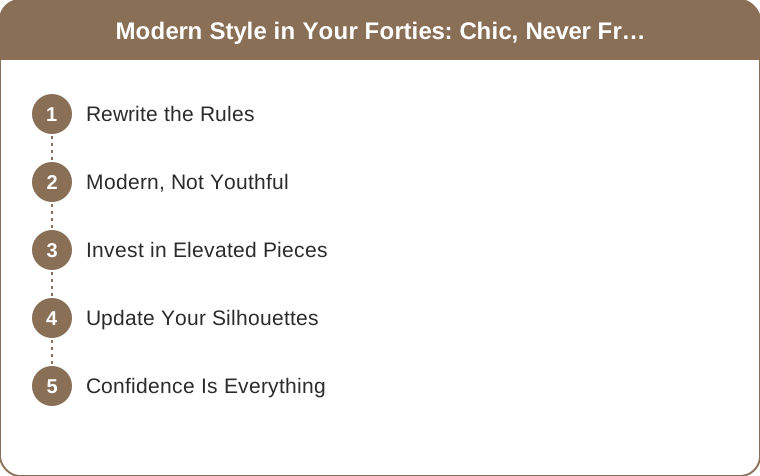
What Does “Modern, Not Youthful” Actually Mean?
It’s the distinction the whole thing hinges on, and it’s easier to see in examples than definitions.
Current means contemporary proportion, fabric, and cut. A wide-leg trouser. A relaxed blazer with a soft shoulder. A modern shoe silhouette. These read as now, and they read as now on anyone.
Young means pieces designed around a specific stage of life — the crop that assumes you’re not sitting in meetings, the trend with a nine-month lifespan, the fit that depends on a twenty-two-year-old’s schedule. Not off-limits, but not where the payoff is.
The test that sorts them: would this piece look good on a well-dressed woman of any age, or does it depend on the wearer being young? The first category is where you shop. The second is where the anxiety lives.
This is also why chasing trends aimed at twenty-year-olds backfires — not because of any rule, but because those trends are built to be disposable, and disposable is the opposite of what you want at this point.

Where Should You Spend Money on Clothes in Your Forties?
On the things that touch structure: tailoring, fabric, and shoes.
Tailoring first. A $200 blazer that fits your shoulders beats a $600 one that doesn’t, and a $40 alteration on something you already own often beats both. Shoulder fit, sleeve length, and trouser break are the three adjustments with the highest visible return.
Fabric second. Wool, good cotton, silk, quality knits — they hold shape, drape properly, and photograph well. Cheap synthetics look cheap under any lighting, and they look worse over time rather than better.
Shoes third, and this is the one people underspend on. Shoes are the single most visible quality signal in an outfit and the piece you’ll wear most in a decade where comfort has stopped being negotiable.
Timeless silhouettes over trend pieces. A well-cut coat, a straight-leg trouser, a proper white shirt. These look sophisticated and current simultaneously, which is the whole target — and they stay wearable for years, so the cost-per-wear math works out even at higher prices.
The rough allocation: 70% of your budget on the ten pieces you wear constantly, 30% on the fun stuff that keeps a wardrobe from feeling like a uniform.
How Do You Update Your Silhouettes Without Starting Over?
Silhouette is the fastest tell for whether a look is current, and it’s also the cheapest thing to fix — you’re adjusting proportions, not replacing a closet.
Three adjustments that do most of the work:
- Check your trouser width and rise. A skinny jean with a mid rise reads as a specific past decade. A straight or wide leg with a higher rise reads as now. Same outfit otherwise.
- Look at where things end. Sleeve length, hem length, and jacket length are what date a piece faster than color or pattern. A jacket that ends at the widest part of your hip is fighting you.
- Rebalance volume. Contemporary proportion generally pairs one loose piece with one fitted piece. Fitted-on-fitted reads 2010s; loose-on-loose reads unstructured. One of each reads current.
Start with one silhouette swap, not five — it’s the fastest way into a signature style that doesn’t need rethinking every season. Change your trouser shape and wear it with everything you already own for two weeks — you’ll see immediately how much of your wardrobe was being held back by one proportion.
Myth vs Fact: Style After Forty
Myth: You should dress “age-appropriately.” Fact: The phrase almost always means “less visible.” Occasion-appropriate is real and useful; age-appropriate is a rule with no content behind it.
Myth: Investing in clothes at forty is too late to pay off. Fact: It’s the point at which it pays off most. You know your size, your life, and your preferences with a precision you didn’t have at twenty-five, which means far fewer expensive mistakes.
Myth: Neutral, muted colors are safer. Fact: Safer, sometimes. But an all-beige wardrobe is one of the fastest routes to looking washed out, particularly as skin tone shifts. Color near the face is one of the highest-return adjustments available.
Myth: Confidence is the only thing that matters. Fact: Confidence matters enormously and it isn’t a substitute for a jacket that fits. Well-fitting clothes are one of the more reliable ways to generate confidence, which is the direction the advice usually gets backward.
Mini FAQ
What should you stop wearing in your forties?
Nothing, categorically. What’s worth retiring is anything that no longer fits properly, anything worn out, and anything you keep because of who you were rather than who you are. That’s a condition-and-relevance audit, not an age one.
How do you build a capsule wardrobe in your forties?
Start from your actual week. Count how many days you need work clothes, casual clothes, and something dressier, then build in roughly that proportion. Most people over-buy for the occasions they have least often. Ten to fifteen well-chosen pieces cover the majority of a real life.
How often should you update your wardrobe?
A meaningful proportion review once a year, and a genuine silhouette update every two to three years. That’s not a shopping schedule — it’s a checking schedule. Most wardrobes drift out of date gradually, so a scheduled look is what catches it before it becomes a full rebuild.
TL;DR:
- There are no real age rules — frumpy is a wardrobe that stopped getting updated, not a birthday.
- Aim for current, not young: pieces that look good on anyone, not pieces that depend on being twenty-two.
- Spend on tailoring, fabric, and shoes; 70% of budget on the ten things you actually wear.
- Update silhouettes before buying anything — trouser rise and width, hem placement, and volume balance.
- Confidence matters, and so does a jacket that fits. They’re not alternatives.
Your forties can genuinely be your most stylish decade, for the boring and excellent reason that you finally know what you like. Aim for contemporary rather than youthful, spend on the pieces that carry the outfit, update your proportions, and wear the results like you chose them. Because you did.
Keep Reading
This article is for general styling and informational purposes only. Trends, sizing, availability and pricing may vary by brand and season.