The Forties Closet Edit: Releasing Your Twenties Wardrobe and Dressing Who You Are Now
The forties closet holds archaeological layers — the twenties going-out tops, the thirties office armor, the aspirational sizes — and the edit isn’t decluttering so much as identity work: releasing who you were to dress who you are. The forties closet guide.

The Identity-Shift Problem
Why the closet lags the life: the archaeology diagnosis (the wardrobe recording past selves — the club-era pieces, the old-job uniforms, the pre-kids sizes; the closet as museum per the detox logic), the aspirational-size weight (the someday-again pieces taxing every morning — the fits-now doctrine from the closet logic; the size-neutral kindness per the body logic), the style-evolution honesty (the taste genuinely shifted — the pieces loved THEN being data, not obligations; the evolution-not-overhaul framing from the evolution logic), the guilt inventory (the expensive-mistake pieces held hostage by their price tags — the sunk-cost release per the detox logic), and the reframe (the edit as self-respect — the closet curated for the woman dressing TODAY per the now logic).

The Edit-With-Kindness Method
The session: the category passes (the closet processed in groups per the audit logic — the going-out-tops category being the forties edit’s emotional center), the three-question filter (the does-it-fit-NOW, the would-I-buy-it-today, the does-it-serve-my-actual-life triage — the calendar honesty: the life’s real occasions per the lifestyle logic), the sentimental protocol (the memory pieces honored differently — the keep-a-few-in-a-memory-box solution from the sentimental logic; the wedding-and-milestone pieces exempted from the wardrobe count), the aspirational-size decision (the sizes released with kindness — the current-body wardrobe being the confidence move per the body logic; the one-size-range honesty), the trial-separation option (the unsure pieces boxed for a season per the capsule-test logic — the reversible edit), and the exit routes (the consignment for the quality, the donation, the friend hand-offs — the pieces sent to second lives per the thrift logic).
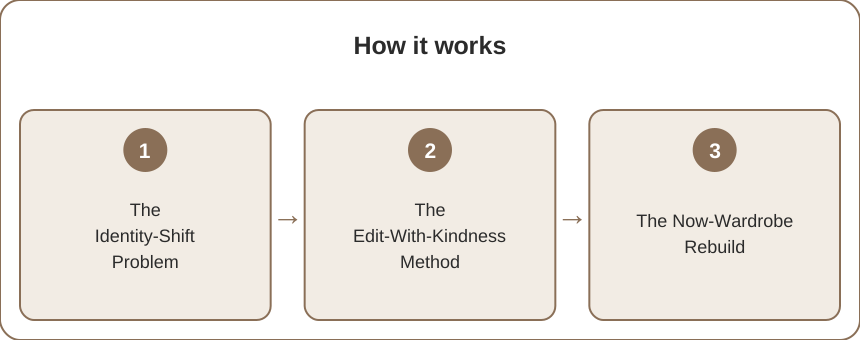
The Now-Wardrobe Rebuild
Dressing the current chapter: the gap analysis (the edited closet revealing the REAL needs — the current-life occasions counted; the shopping list from evidence per the inventory logic), the style-definition session (the now-aesthetic named — the icons-and-images that resonate TODAY per the signature logic; the three-words exercise: the style described and used as a filter), the quality pivot (the forties budget buying better-fewer — the investment logic at its natural decade; the cost-per-wear maturity), the fit-and-tailor alliance (the alterations normalizing per the tailoring logic — the fits-perfectly standard replacing the fits-okay), the joy verification (the rebuilt wardrobe passing the excited-to-wear test — the closet of YES per the joy logic), and the closing frame (the museum converted to a working wardrobe — the past honored in a memory box, the present dressed with intention; the woman in the mirror, dressed as herself, now). Fits now, buy-it-today test, memory box for the rest: the closet, brought up to date.
The forties closet is archaeology — edit it as identity work: run every piece through fits-NOW, would-I-buy-it-today, and does-it-serve-my-actual-calendar. Release aspirational sizes with kindness, honor sentimental pieces in a memory box outside the wardrobe count, box the unsure for a season, then rebuild for the current chapter: better-fewer, tailored, and passing the excited-to-wear test.
Keep Reading
This article is for general styling and informational purposes only. Trends, sizing, availability and pricing may vary by brand and season.