Ageless Outfit Formulas That Always Look Elegant
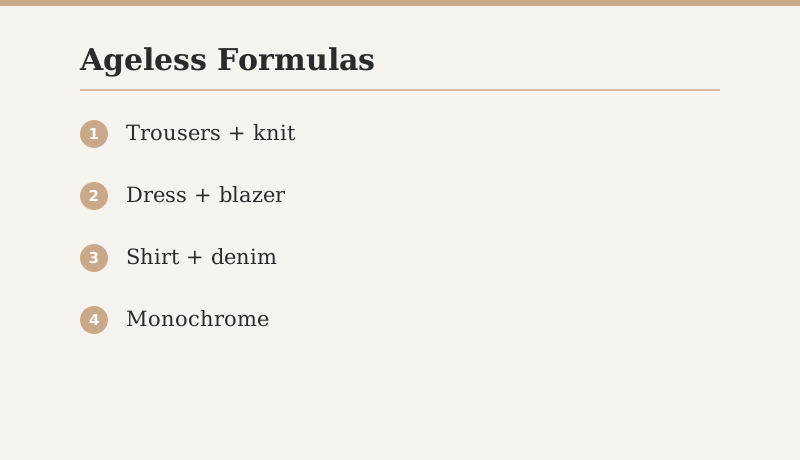
Quick Answer: Four outfit formulas look elegant at any age and in any season: tailored trousers with a fine knit, a well-fitting dress under a blazer, a crisp white shirt with dark denim, and head-to-toe monochrome. Each one relies on fit and a limited palette rather than trends, which is exactly why they don’t date.
There’s a specific kind of frustration in owning plenty of clothes and still standing there at 7:40 a.m. with nothing to wear.
The fix isn’t more shopping. It’s having four combinations you don’t have to think about — the ones that look pulled-together whether you’re 32 or 62, in July or January.
Commit these to memory and getting dressed stops being a decision.

What makes an outfit formula ageless?
Three things, and none of them are trends.
Clean lines. Formulas built on simple shapes read the same in any decade, because there’s no detail to date.
Neutral colors. A palette of navy, camel, cream, black and grey doesn’t belong to a season, which is why these combinations survive years of wardrobe turnover.
Proportion over embellishment. The elegance comes from where the hem lands and where the waist sits, not from what’s printed on the fabric. Proportion doesn’t expire.
That’s why the four formulas below work whether you’re 32 or 62 — they’re structural, not decorative.
Formula 1: Tailored trousers + fine knit
The eternal one. Well-cut trousers and a fine-gauge knit, and you’re done.
Why it works: the trouser provides structure, the knit provides softness, and neither is fighting the other. Add loafers or a low heel and a structured bag, and the same outfit handles the office, lunch and dinner without changes.
The variables worth getting right: the trouser hem should just graze the top of your shoe, and the knit should be fine enough to tuck. Those two details are doing most of the work.
Endlessly repeatable, and nobody ever notices you’ve worn it three times this month.
Formula 2: The dress and blazer
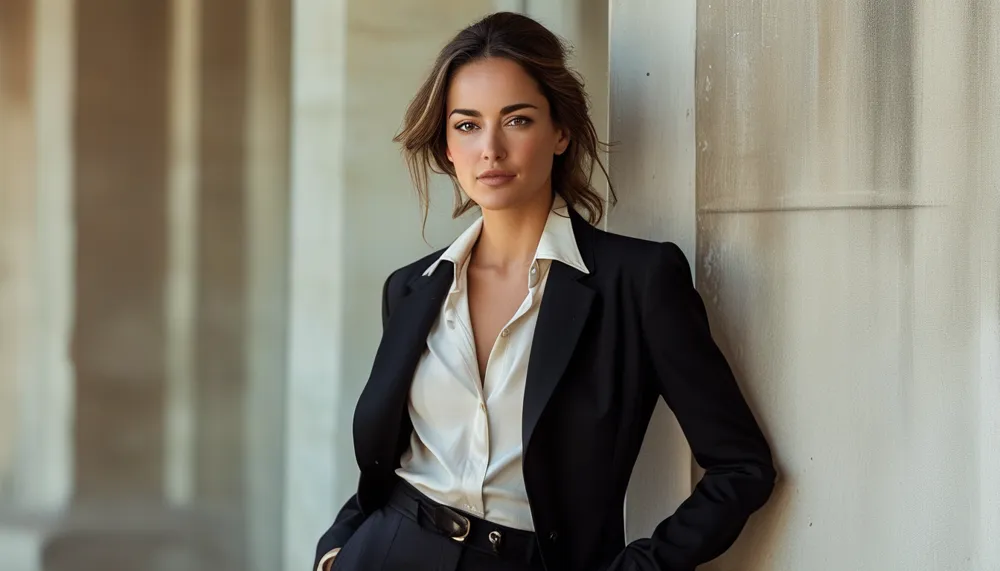
A well-fitting dress with a tailored blazer over it is the ultimate no-fail combination.
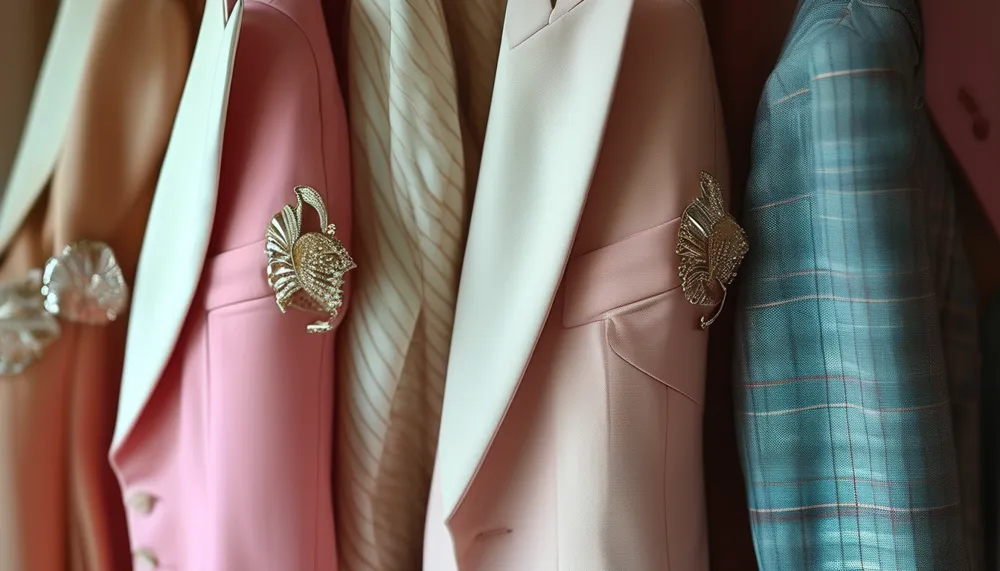
It’s polished, it takes eleven seconds, and it’s appropriate for a genuinely absurd range of occasions — work, a lunch, a funeral, a wedding you’re not in. Change the dress and change the blazer and a handful of pieces produces dozens of complete outfits.
For the elegant version rather than the corporate one: leave the blazer open, and let the dress be the simpler of the two pieces.

Formula 3: Crisp shirt + great denim
A genuinely crisp white shirt with dark, well-fitting jeans is understated elegance at its most reliable.
Two words carry this one: crisp and dark. A limp shirt or a faded, ill-fitting jean turns the same formula into ordinary weekend clothes. The white shirt is worth ironing; the denim is worth hemming.
Dress it up with heels and gold jewelry, or keep it easy with flats and a watch. Either direction reads effortlessly chic, and it has for about fifty years.
Formula 4: Monochrome everything
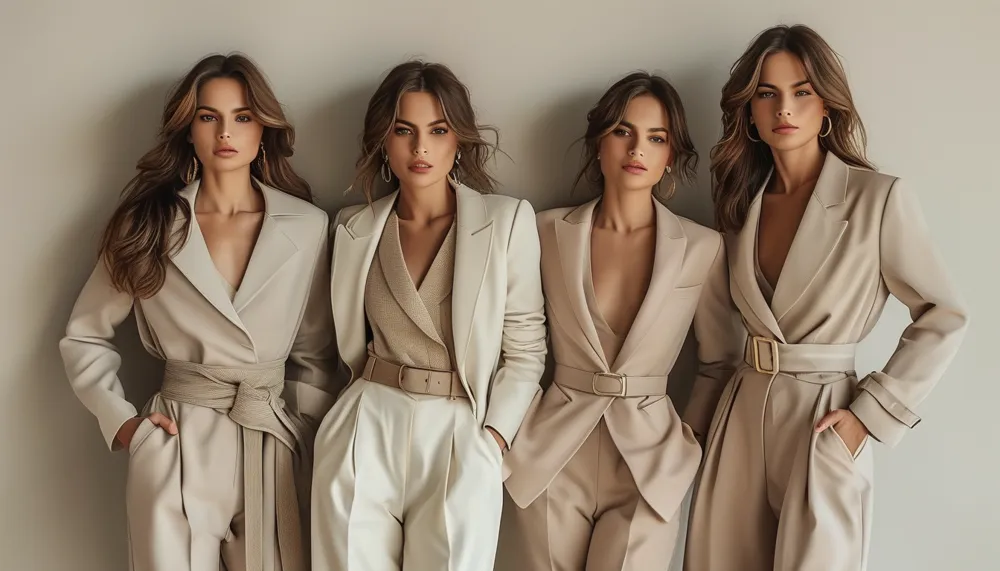
Dressing head-to-toe in one color — or in tonal shades of one — is the closest thing to an instant elegance trick.
The mechanism is simple: an unbroken vertical line elongates, and a single color removes every question about whether things match. It always looks intentional, because it obviously was.
Pick one and let it carry the outfit: camel, navy, black, cream, or three shades of grey. Vary the textures — a knit, a wool trouser, a leather shoe — so the tonal look has depth instead of flatness.

What Nobody Tells You About “Ageless” Style
These formulas aren’t magic on their own. Three unglamorous things decide whether they land:
- Fit beats everything else combined. A $60 trouser that fits reads better than a $400 one that doesn’t. Hemming and taking in a waist costs less than most people assume and changes more than most purchases do.
- A limited palette is what makes a wardrobe look expensive. Three or four colors that all work together means every formula above is available every morning. A closet full of one-off colors means most of it can’t combine.
- Fabric is the tell. Natural fibers and heavier weights drape and hold shape. This is what people are reading when they say something looks “quality” — it’s rarely the label.
And the thing nobody says out loud: elegance is mostly repetition. The people who always look pulled-together are usually wearing the same four combinations on rotation, and they figured that out years ago.
Frequently Asked Questions
What outfit formulas work at any age?
Tailored trousers with a fine knit, a dress with a blazer, a white shirt with dark denim, and head-to-toe monochrome. All four rely on fit and proportion rather than trend details, which is what keeps them from reading as age-specific in either direction.
How do I build a wardrobe around outfit formulas?
Choose three or four colors that work together, then buy the components of each formula in those colors — trousers, fine knits, a blazer, a white shirt, dark denim, one or two simple dresses. Because everything shares a palette, any top works with any bottom.
Does monochrome dressing really make you look taller?
It creates an unbroken vertical line with no horizontal color break at the waist, which is what the eye reads as length. Keeping the shoe close in tone to the hem extends the effect further, which is why tonal dressing is a standard trick for looking elongated.
TL;DR:
- Four formulas cover almost everything: trousers + fine knit, dress + blazer, white shirt + dark denim, monochrome
- Fit does more than price — hemming and tailoring are the highest-return spending you can do
- A limited palette of three or four colors makes every formula available every day
- Vary texture within monochrome so tonal dressing has depth rather than flatness
- Elegance is mostly repetition; the people who always look good are rotating a small set
Keep Reading
This article is for general styling and informational purposes only. Trends, sizing, availability and pricing may vary by brand and season.